Frequently Asked Questions
-
We are a Canadian Non Profit Animal Welfare Organization and sanctuary focused especially on animals who are easy to overlook, especially seniors, blind and disabled animals, and those who have experienced trauma.
Our sanctuary is our home base, but our mission reaches beyond the property. We work alongside shelters, rescue partners and communities through storytelling, adoption connections, transport, advocacy, surrender support and crisis relief.
We help locally and, when within our reach, internationally, including in conflict zones. We ask: Who is being missed? What is missing? How can we help?
Sometimes the missing piece is a safe place to land. Sometimes it is an adopter, resources, a story that gets seen, or the right people working together.
We cannot carry everything, but we can pick up a corner.
-
Just because their story began this way does not mean it has to end this way.
An animal’s past may include abandonment, neglect, loss or years of being overlooked. But their hardest chapter does not have to define the rest of their life.
New Leash On Love means another chance at safety, belonging and being loved. A chance to discover that something good can still happen next.
We cannot change how their story began. Together, we can help change how it continues.
-
Sanctuary gives dogs the time to heal, decompress, receive medical care, and simply be dogs. Some remain with us for life, while others move on to carefully matched forever homes.
-
We focus on dogs who are too often overlooked: seniors, blind and disabled dogs, trauma survivors, and those who have spent years waiting in shelters.
We see individuals with personalities, relationships and lives still to be lived. Each deserves safety, belonging and care that meets their needs.
Our commitments are thoughtful and guided by our capacity to provide meaningful, lasting support. That might mean sanctuary care, helping a dog find the right home, sharing their story or connecting people who can help.
Our work begins close to home and reaches further when our resources and partnerships allow, throughout Ontario, across Canada and sometimes into conflict zones overseas.
Where a dog comes from does not determine their worth. And how their story began does not have to determine how it ends.
-
Our sanctuary is in Ontario, Canada. Some dogs we share are here with us, while others remain in the care of partner organizations elsewhere in Canada or overseas.
We help connect overlooked dogs with suitable adopters, including homes beyond Ontario. Each adoption depends on the dog’s needs, the destination’s requirements and available transport.
International adoptions take time. Veterinary preparation, documentation and travel arrangements vary, so we discuss the process for each dog individually.
Our home base is Ontario, but our connections reach much further. Please contact us through our website to ask about a particular dog.
-
At this time, New Leash On Love Sanctuary is not open to public visits.
The sanctuary is a privately owned and privately funded home and property, and the safety and privacy of the dogs in our care comes first.
Many of our dogs have histories of neglect, abandonment or trauma, while others live with anxiety or behavioural challenges. We also have an established pack, and protecting the delicate balance, routine and sense of safety within that pack is an important part of their care.
For these reasons, we keep the sanctuary’s location private and limit access to approved caregivers and professionals.
The sanctuary is their home first.
That doesn’t mean you can’t meet the pack! We offer other opportunities to connect with our dogs, including community pack walks, adoption events, fundraisers and other public events. Follow along on social media for upcoming dates.
-
Potentially, yes. Depending on the individual dog, destination country, flight availability and current import requirements, some dogs can travel to adopters outside Ontario and internationally.
-
Yes, many communities have more animals needing care than available homes and resources can accommodate. The pressure varies by region. Alongside unwanted litters, housing challenges, financial strain and limited access to veterinary care can leave families unable to keep their pets. The Ontario SPCA reported a 17% increase in surrender requests from 2024 to 2025. (ontariospca.ca)
Local shelters and rescues provide essential care, but some dogs need extra help getting noticed or finding a suitable home. Seniors, disabled dogs, certain breeds and dogs with more complex needs can be overlooked.
We often reach out to foster caregivers, rescues, neighbours and shelters and ask: Where are the gaps? What do you need? How can we support you?
That support might mean sharing a dog’s story, connecting potential adopters, helping find supplies or resources, or offering sanctuary care when our capacity allows.
We support the helpers already doing this work. By listening and working together, we can help create a pathway home for a dog and ease some of the pressure on those caring for them.
-
Our focus begins locally, supporting dogs and families through sanctuary care, surrender support and collaboration with local shelters.
When it is within reach and we can help sustainably and responsibly, we also share the stories of dogs with international rescue organizations, including those in conflict zones.
We are the storytellers. We help overlooked dogs get seen by sharing their personalities, needs and potential, and connecting interested adopters with the organization caring for them. That organization manages the final adoption contracts and receives any adoption fees directly.
Our storytelling has helped dogs connect with adopters in Canada, France, the Netherlands, England and other countries.
Compassion crosses borders. Sometimes our part is simply helping the right person see a dog they might otherwise never have found.
New Leash On Love is an Animal Welfare Organization and Sanctuary is not a rescue or shelter.
We do both.
We support local rescues and shelters. We take in local surrenders. We help families in crisis. And when our resources, relationships and capacity allow, we also work across borders to help shelters in crisis connect appropriate dogs with adopters.
International rescue does not replace our local work.
We actively help dogs in our own community.
We regularly hear from families who love their dogs but suddenly find themselves without options.
We have helped local dogs whose circumstances changed because of:
Moves or housing changes
New babies
New puppies entering the household
Family or financial crises
Behavioural or aggression concerns
Aging caregivers
Medical needs
Disability
Seniors whose circumstances suddenly changed
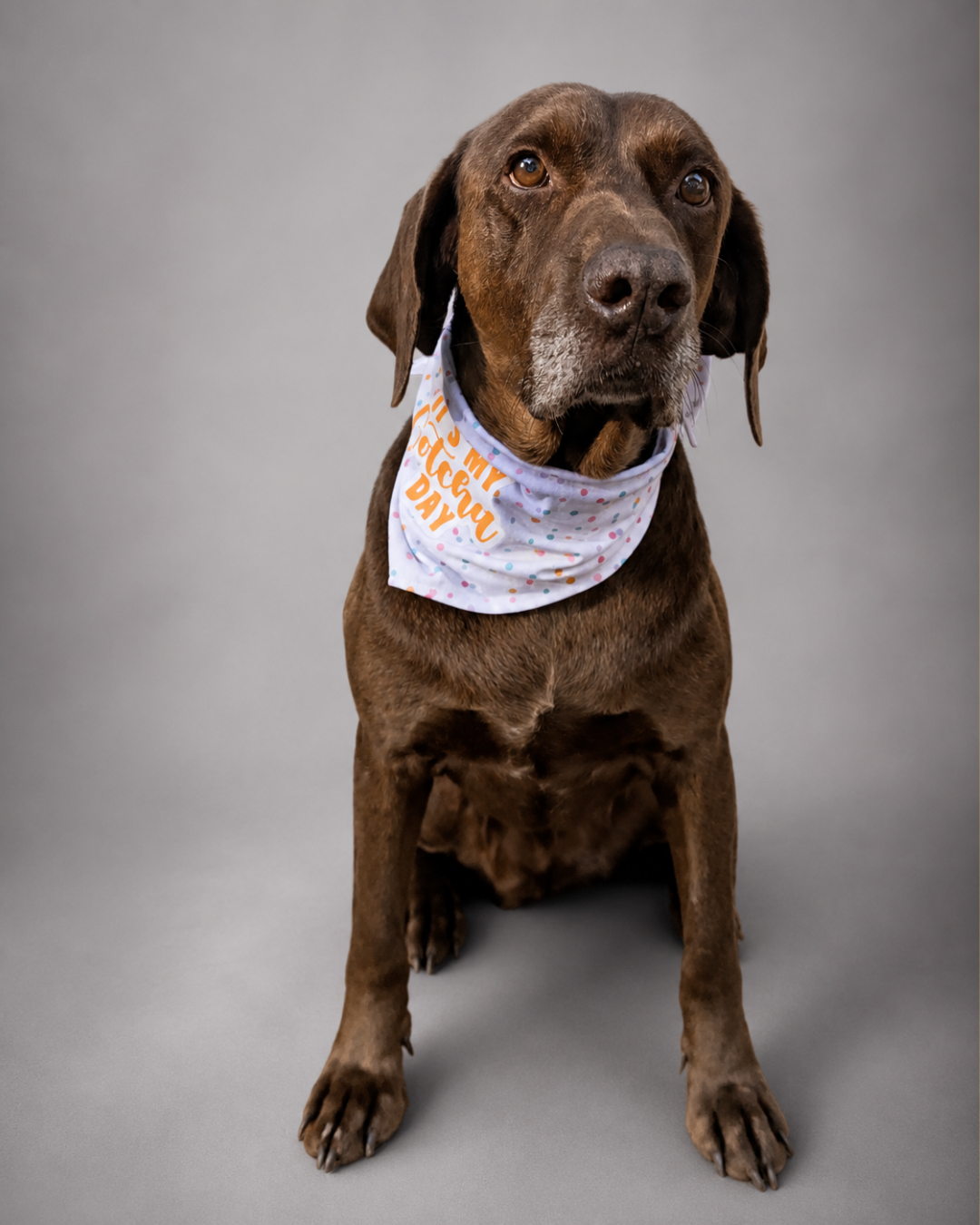
We recently welcomed an elderly Pyrenees/Golden Retriever mix through Lab Rescue after he needed somewhere safe to land.
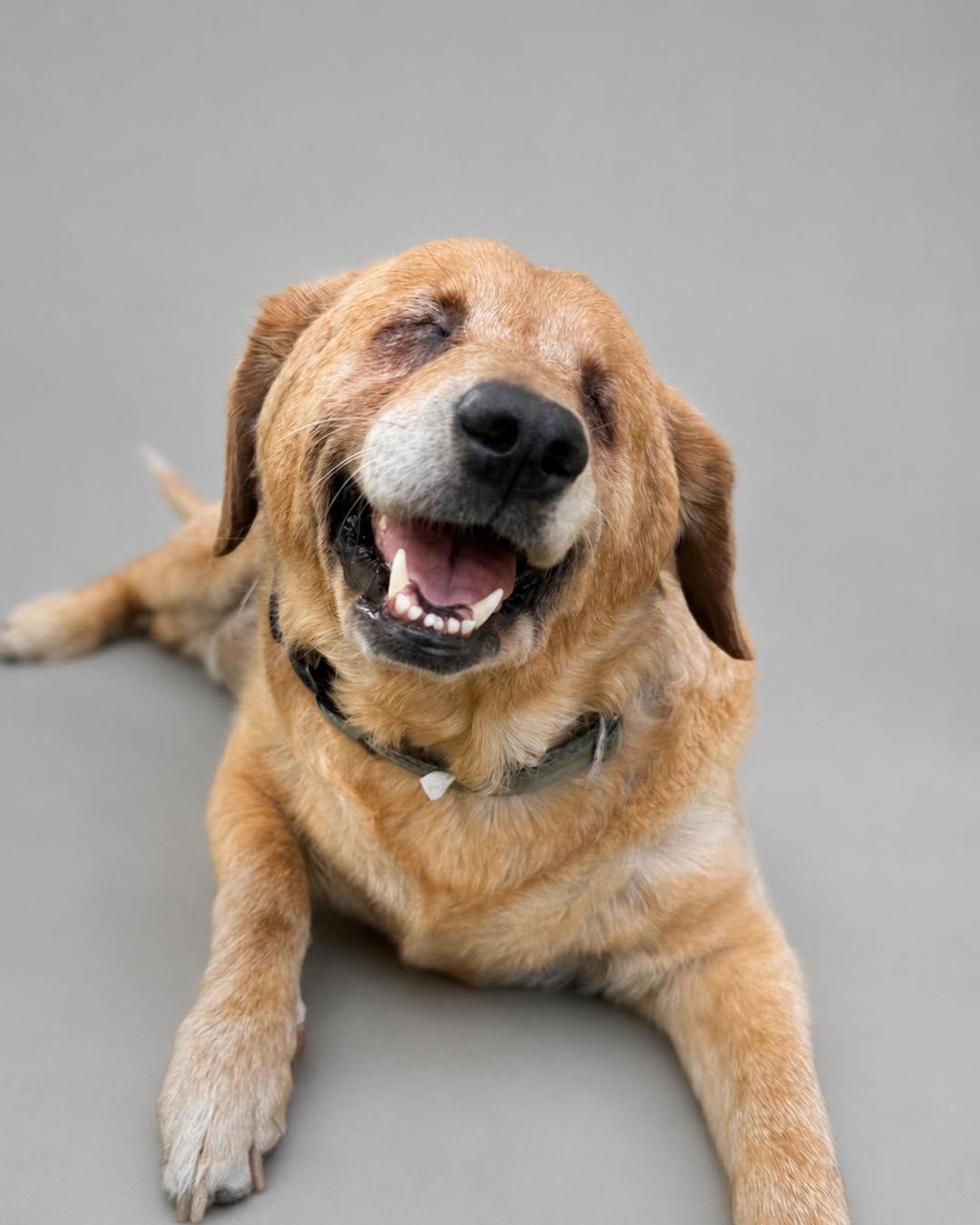
A few months ago, we also welcomed Angel Dumpling, a blind dog from Northumberland Humane Society, into our sanctuary family.
Those are only two examples people may have seen publicly.
We have also helped countless local surrenders behind the scenes — dogs left without options after moves, babies, new puppies, behavioural challenges and major life changes.
Whenever we can help a family before a dog enters an already-overburdened shelter system, that matters too.
So why help internationally?
Because sometimes suffering happens outside our postal code, and helping is within our reach.
When we have the capacity, an appropriate placement and trusted rescue partners, we may cross borders to help shelters in crisis connect a senior, disabled or overlooked dog with an adopter.
Sometimes that dog has been waiting for years.
Sometimes they are elderly.
Sometimes they are blind or disabled.
Sometimes they have survived severe trauma, conflict or displacement.
Sometimes they have simply been passed over again and again.
And sometimes helping one dog leave a shelter creates desperately needed space for another animal coming in.
We do not believe compassion needs a border.
We do believe it needs responsibility, capacity and accountability.
-
There are many ways to help, and each one matters.
Donate or sponsor a dog. Help provide food, veterinary care and ongoing sanctuary support at newleashonlove.ca/donate.
Share their stories. Sharing an overlooked dog with your friends, family or community could help the right person find them.
Consider adopting or fostering. If you have the space, time and suitable home, visit our website to learn about the dogs and how to apply.
Offer your skills or resources. Photography, storytelling, transport, fundraising, supplies and community connections can all make a difference. Contact us to explore where your help is needed.
Support the helpers. Volunteer with a local shelter, encourage those doing the daily work or connect them with someone who can help.
You do not have to carry the whole load. Sometimes kindness begins with picking up one corner.
-
Absolutely. Most of the dogs in our care are local Ontario surrenders or shelter dogs, many with complex needs.
-
We focus on dogs who are overlooked, including seniors, blind and disabled dogs, trauma survivors and those with medical or behavioural needs.
Some are passed over because of their breed, appearance or traits others consider undesirable. Others simply struggle to stand out in an overcrowded shelter.
We ask: Why is this dog still waiting? What is missing that could help them find a pathway home? And how can we support the people already helping them?
That support might mean sharing their story, connecting them with a suitable adopter, helping find resources or offering sanctuary care when our capacity allows. Each commitment is guided by what the dog needs and what we can responsibly sustain.
-
Through private donations, fundraising, sponsorships, grants, and our own contributions.
-
Donations support veterinary care, food, medications, transportation, enrichment, sanctuary operations, and community outreach.
-
In many ways, animal welfare and human welfare are deeply connected. Animals live in human circumstances.
If you care about animals, you also have to care about the circumstances affecting the people who love and care for them. Housing insecurity, poverty, domestic violence, war, displacement, access to veterinary care and the rising cost of living can all determine whether someone is able to keep their animal.
Many animals entering shelters aren’t there because someone stopped loving them. Sometimes a person simply ran out of safe or affordable options.
That is why rescue can’t only be about removing an animal from a difficult situation. It can also mean helping families stay together, supporting community resources, providing crisis relief and reducing barriers to responsible animal care.
And yes, policy matters. Housing laws, funding for shelters, access to affordable veterinary services, animal-protection legislation and social supports are shaped by governments and elected representatives.
Your voice matters. Your advocacy matters. Your vote matters.
We believe caring about animals and caring about people aren’t competing causes. Compassion works best when it includes both.
-
Like any rescue dog, they need time to decompress and adjust. We recommend keeping the first few weeks quiet, structured and predictable, allowing them to learn their new home, people and routine without overwhelming them.
Some may need house-training and basic training, just like any other newly adopted dog. Everyday experiences may also be completely new. Some may never have regularly ridden in a car, lived inside a home, walked through a neighbourhood or met many people outside the shelter.
We recommend crate training as a positive skill and safe space, particularly during the transition. Give them somewhere quiet that belongs to them and never use the crate as punishment.
At first, clear away shoes, garbage, food and anything tempting or unsafe to chew. A dog who has never lived in a home doesn’t automatically know the difference between their chew toy and your favourite shoe. Provide appropriate chew toys and calmly teach them what’s theirs.
Many of our dogs have spent years living around other dogs and are actually highly socialized within a pack. Once they’ve had appropriate decompression time, we encourage adopters to gradually continue positive socialization. Safe walks, enrichment, training, new people and appropriate interactions with other dogs are important for their mental and physical wellbeing.
Most importantly, don’t expect them to arrive knowing how to be a house dog.
Give them structure, patience and time to learn , just as you would any other rescue dog.
-
They come back to us.
This is a fundamental part of our rescue model.
Every dog placed through New Leash On Love is contractually required to be surrendered back to us if their adopter can no longer care for them.
They are not to be surrendered to another shelter, independently rehomed or passed from home to home.
We remain responsible for the dogs we place.
Responsible rescue does not end on adoption day.
That means supporting adopters when challenges arise, helping with transitions and remaining a permanent safety net if circumstances genuinely change.
-
There are several excellent resources for canine mobility equipment. Not every disabled dog needs a wheelchair, and not every dog needs the same kind. The goal is to find the support that allows that individual dog to move safely, comfortably and independently.
Wheelchairs can include:
Rear-support chairs for hind-leg weakness or paralysis
Front-support chairs for dogs with front-limb disabilities or amputations
Quad/four-wheel chairs for dogs needing support at both ends
Custom wheelchairs for unusual anatomy, amputations or complex injuries
Braces, orthotics and 3D-printed supports, which may be a better option for some dogs
Wheelchair & Mobility Resources
Tysons Love and Hope on Wheels
A nonprofit providing loaner wheelchairs to pets with mobility challenges, including dogs with paralysis, amputations, degenerative myelopathy and other disabilities. They have helped dogs in Canada and can provide guidance with fitting and adjustments.Determined as Diesel
An Ontario-based special-needs and senior-dog resource with experience helping disabled dogs and families navigate mobility equipment and wheelchair needs.Walkin’ Wheels / Handicapped Pets Canada
Adjustable canine wheelchairs available in Canada, including rear-support and four-wheel/quad configurations. A useful option because some systems can be modified as a dog’s mobility needs change.K9 Carts
Specializes in canine mobility equipment, including custom-built wheelchairs. They offer options for dogs with front-limb disabilities as well as rear and more complex mobility needs.Eddie’s Wheels
Custom-built mobility carts designed around an individual dog’s measurements and physical needs. This can be particularly helpful for dogs whose anatomy doesn’t work well with a standard adjustable chair.A wheelchair isn’t automatically the answer.
Some dogs use their chair every day. Others only need one for longer walks, exercise or rehabilitation. Some disabled dogs are perfectly comfortable getting around without one.
Dogs with unusual amputations, deformities or injuries may actually function better with a custom brace, orthotic or 3D-printed support rather than a traditional wheelchair.
Whenever possible, work with your veterinarian, rehabilitation professional or experienced canine mobility specialist to determine what equipment is appropriate and to ensure it fits correctly.
The goal isn’t to make a disabled dog move like an able-bodied dog. It’s to give them the tools they need to live their fullest life.
-
It varies depending on the local rescue and shelter and their resources. For example, the Ontario SPCA provides an intake examination, vaccinations and parasite treatment, while tick and heart work disease screening may need to be arranged with the adopter’s vet. Animals are often be neutered/spayed, depending on resources. Vaccinations vary.
Dogs travelling from abroad have a more extensive vetting, the dogs receive comprehensive veterinary care, including:
Spay or neuter
Microchip
Rabies vaccination
Canine distemper
Adenovirus
Parainfluenza
Parvovirus
Leptospirosis
Canine coronavirus vaccination
Blood work and infectious/vector-borne disease screening, including heartworm and other regionally relevant diseases
Flea/tick treatment and deworming
Dental cleaning when needed
Full veterinary examination and assessment before travel
The vaccination records shown include Vanguard Plus 5/L (distemper, adenovirus type 2, parainfluenza, parvovirus and leptospirosis), Defensor 3 rabies vaccine, and FirstDose CV canine coronavirus vaccine.
Not every dog is cleared to fly. Dogs with serious or life-threatening medical conditions—or a condition such as a significant heart murmur that makes air travel unsafe—do not fly. Their health and safety always come before an adoption or travel plan.
The dogs’ health and ability to safely withstand travel are taken seriously. Dogs with serious or life-threatening medical conditions, or significant heart murmurs that make flying unsafe, do not fly. Their welfare always comes first.
Because disease risks vary by country, screening is based on diseases relevant to their re each adopters countries guidelines.
Dogs are often tested for:
Leishmania (Leishmaniasis)
Ehrlichia (Ehrlichiosis)
Anaplasma (Anaplasmosis)
Babesia (Babesiosis)
-
Adopting one of our dogs is a commitment—and surrendering them back to us is part of that commitment.
Our adoption agreement includes a contractual obligation that the dog be returned to New Leash On Love if the adopter can no longer safely or responsibly care for them.
They are not to be privately sold, surrendered to another shelter, given away online or independently rehomed without our involvement.
We understand that life circumstances can change. Asking us for help is not a failure. We would much rather receive the call than discover one of our dogs has been passed from home to home.
When we say a dog is safe for life, we mean it.
Once a New Leash On Love dog, always a New Leash On Love dog.
-
No. Blindness is a description, not a diagnosis.
Dogs can lose vision gradually or suddenly, in one eye or both. Causes include cataracts, glaucoma, progressive retinal atrophy (PRA), sudden acquired retinal degeneration syndrome (SARDS), retinal detachment, neurological disease, congenital conditions and physical trauma to the eye or brain.
Some of the dogs we encounter have also survived severe physical trauma.
Every dog’s blindness should therefore be understood individually. A veterinary examination—and sometimes a veterinary ophthalmologist—is important because some eye diseases can also be painful, even when vision cannot be restored.
Blind Dog Resources
Muffin's Halo — A wearable bumper/halo that protects a blind dog’s face and head while they learn to navigate. Their organization also works with Second Chances for Blind Dogs to redistribute donated halos.
Down to Earth Dog Lady — Positive-reinforcement trainer Erin Marion specializes in puppies and dogs who are deaf and/or blind and teaches guardians how to build communication systems with them. Her Instagram is @downtoearthdoglady.
-
First: don’t adopt them because you feel sorry for them.
Disabled dogs generally don’t experience their disability the way humans imagine it. Blind and deaf dogs can have excellent quality of life and often adapt extraordinarily well.
What they need is a person willing to learn what their particular dog needs.
That means being prepared financially for veterinary care, medications, mobility equipment, rehabilitation or specialist appointments when necessary. It also means having the time and patience for training, environmental adaptations and follow-up care.
Most importantly, adopters need the right attitude. Don’t continually treat a disabled dog as fragile or incapable. Give them safe opportunities to explore, exercise, problem-solve and be dogs.
They are usually far more capable than you think.
-
Blind dogs create what we often call a mental map of their environment.
Consistency is incredibly helpful. Keeping furniture, beds, water bowls and major pathways in predictable locations allows the dog to learn the layout and move through it confidently. Veterinary guidance specifically recommends maintaining a consistent home layout and using textures, scents and tactile markers to help dogs navigate.
Rugs can identify doorways or rooms. Different flooring textures can signal stairs or boundaries. Verbal cues such as step, stop, careful, left and right can become incredibly useful.
Protect stairs, pools and dangerous drops while they’re learning.
And don’t assume every blind dog needs a halo forever. Some benefit enormously from one during transition; others quickly learn their surroundings and barely appear blind.
-
Like any rescue dog, they need time to decompress and adjust. We recommend keeping the first few weeks quiet, structured and predictable, allowing them to learn their new home, people and routine without overwhelming them.
Some may need house-training and basic training, just like any other newly adopted dog. Everyday experiences may also be completely new. Some may never have regularly ridden in a car, lived inside a home, walked through a neighbourhood or met many people outside the shelter.
We recommend crate training as a positive skill and safe space, particularly during the transition. Give them somewhere quiet that belongs to them and never use the crate as punishment.
At first, clear away shoes, garbage, food and anything tempting or unsafe to chew. A dog who has never lived in a home doesn’t automatically know the difference between their chew toy and your favourite shoe. Provide appropriate chew toys and calmly teach them what’s theirs.
Many of our dogs have spent years living around other dogs and are actually highly socialized within a pack. Once they’ve had appropriate decompression time, we encourage adopters to gradually continue positive socialization. Safe walks, enrichment, training, new people and appropriate interactions with other dogs are important for their mental and physical wellbeing.
Most importantly, don’t expect them to arrive knowing how to be a house dog.
Give them structure, patience and time to learn — just as you would any other rescue dog.
-
Adoption fees vary depending on the dog and the country they are travelling from.
Costs can depend on:
The country of origin and its travel requirements
Veterinary examinations, vaccinations and required testing
Flight and transportation costs
Whether the dog is a senior or has a disability or special needs
We want adoption to remain accessible, particularly for the dogs who are hardest to place. Senior and disabled dogs will typically have an adoption fee around half that of an able-bodied dog, depending on their circumstances and travel costs.
Because every dog’s journey is different, there isn’t one universal adoption fee.
Please email us about the dog you’re interested in and we’ll provide their specific adoption fee and explain exactly what is included.
-
WE HAVE A NO DOGS LEFT BEHIND POLICY.
That’s why you’ll usually only see us share a handful of dogs at a time.
When NLOL commits to telling a dog’s story, we don’t simply post them and move on.
We make them a promise.
We will keep advocating, sharing, networking and searching until we’ve done everything we can to find them a safe place to land.
For the dogs we formally commit to, our goal is simple:
A HOME — OR, when appropriate and within our capacity, SANCTUARY.
Sometimes medical needs, travel restrictions or circumstances beyond anyone’s control can change what is possible. But being overlooked isn’t a reason for us to stop trying.
And we can’t fulfill that promise alone.
Our community helps us do it by:
Sharing their stories
Applying to adopt or foster
Sponsoring a dog
Helping with flights + transport
Donating toward medical care
Tagging the person who might be their person
Simply helping one more set of eyes find them
We may only carry a few stories at a time — because when we say yes to a dog, we mean it.
No dog quietly disappears from our page because they weren’t chosen quickly enough.
Once they’re ours to advocate for, we keep showing up.
-
No. Some dogs are already with us in Ontario, while others remain safely in the care of trusted rescue and shelter partners while we help them become visible and connect them with potential adopters.
-
Responsible international adoption is a process, not simply putting a dog on a plane. Depending on the destination and the individual dog, the process may include veterinary examinations, blood testing, vaccinations, required waiting periods, documentation and travel arrangements. Some pathways can take approximately three months or longer.
-
Start by completing an adoption application. From there, we can arrange a conversation , learn more about your home and lifestyle, discuss the individual dog and determine whether the placement could be a good fit. We help guide adopters through the process.
-
If you are seriously interested in one of our dogs, please email us or submit an application through our website. We can tell you where that dog is currently located, what their adoption pathway involves and whether travel to your location may be possible.
-
Every pathway home is built by people. A foster offers safety. A neighbour shares a story. A shelter provides care. A donor helps cover a need. Someone makes a connection that changes everything.
Community helps us find the gaps and bring together people who can fill them. We ask what is missing, who can help and how we can support the helpers already doing the work.
We call this picking up a corner. No one person has to carry the whole load. Each of us can take hold of a part, whether through time, skills, resources or kindness.
These networks make our work possible and help us sustain it. Together, we can give overlooked animals more ways to be seen, supported and welcomed home.